



Why Regular Semen Analysis and Prostate Ultrasound Are Essential for Stud Dog Fertility
Updated: Jan 3
By Dr. med. vet. Martina Eyre-Brook MRCVS DVM
For breeders and owners of stud dogs, fertility is often viewed purely in terms of successful matings and litter size. However, true reproductive soundness goes far beyond performance in the whelping box. A comprehensive assessment of a stud dog’s fertility requires more than one diagnostic tool. The combined use of regular semen analysis and prostate gland ultrasound is integral to maintaining reproductive health and detecting disease at an early stage.
More Than a Fertility Test
Semen analysis is frequently associated with investigating fertility problems after failed matings. In reality, it should be viewed as a proactive and preventive measure. A thorough semen evaluation
assesses sperm concentration, motility, morphology, and viability — all essential indicators of a stud dog’s ability to successfully impregnate a bitch.
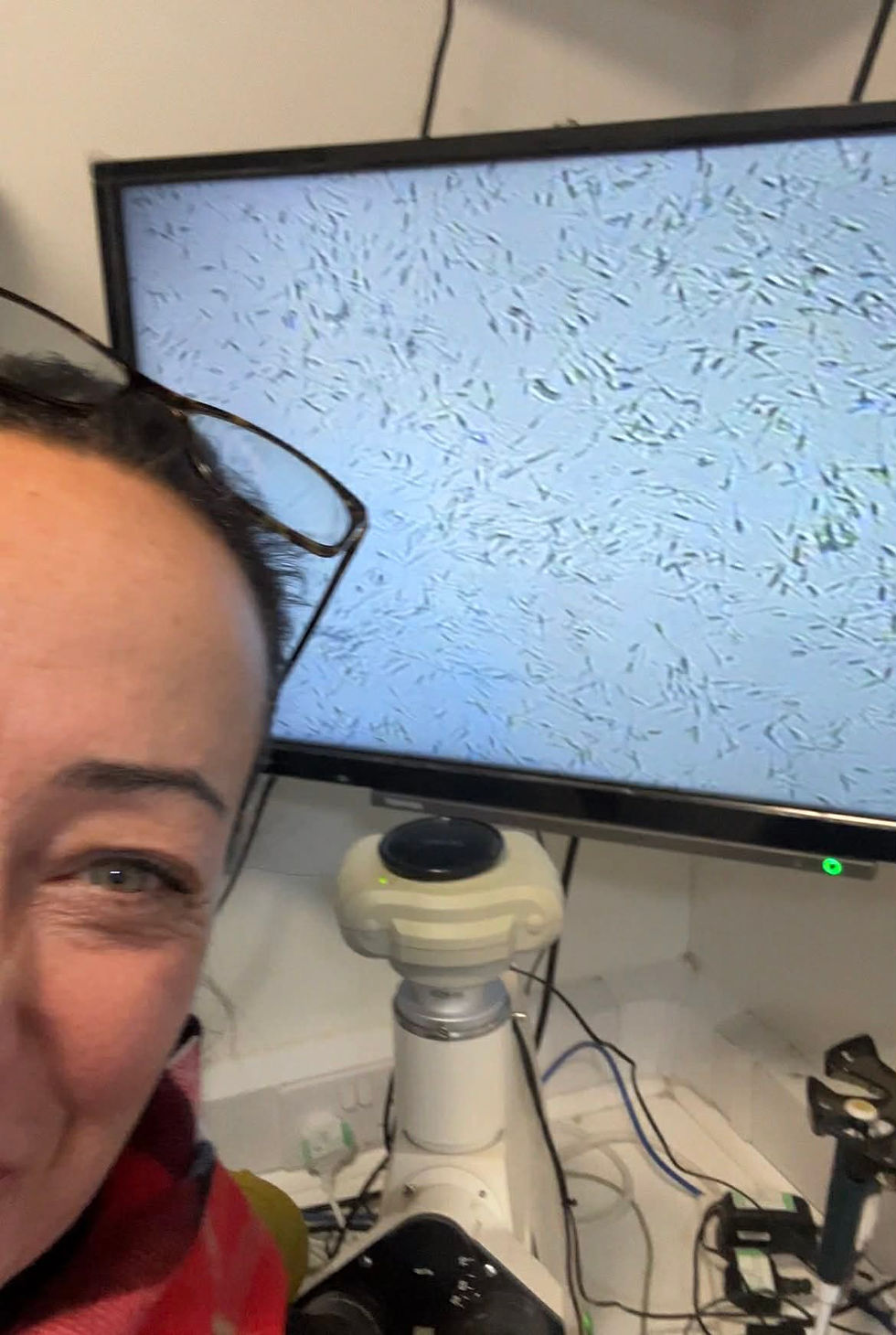
When performed routinely, semen analysis allows a baseline to be established while the dog is young and healthy. This baseline becomes invaluable over time, as even subtle changes in semen quality can be detected early, long before fertility declines to a level that affects breeding success.
The Prostate Gland: A Silent Influencer
The prostate gland plays a central role in male fertility, producing fluid that supports and protects sperm during ejaculation. Prostatic disease is extremely common in intact male dogs, particularly as
they age, yet it often develops silently. Conditions such as benign prostatic hyperplasia (BPH), prostatitis, prostatic cysts, and neoplasia may be present without obvious clinical signs. Changes in semen quality are often the first indication of developing prostate pathology. Reduced sperm motility, decreased sperm numbers, increased abnormal sperm, or the presence of blood or inflammatory cells in the ejaculate are all potential warning signs. However, semen analysis alone cannot fully evaluate the structure of the prostate gland.
Why Ultrasound Matters
Prostate gland ultrasound is a vital complementary tool that allows direct visual assessment of the prostate’s size, shape, symmetry, and internal architecture. Ultrasound can identify enlargement,
cysts, abscesses, mineralisation, or masses that may not yet have caused changes in semen quality or clinical signs. The combination of semen analysis and prostate ultrasound provides a far more complete picture of a stud dog’s reproductive health than either test alone.
Detecting Problems Before They Become Obvious
One of the greatest advantages of combining semen analysis with prostate ultrasound is the ability to detect reproductive disease at an early, often subclinical stage. Many dogs with prostate disease show no pain, urinary difficulty, or visible discharge until the condition is advanced.
Protecting the Stud Dog’s Long-Term Breeding Value
Untreated prostate disease can have long-term consequences, including chronic inflammation, permanent reproductive tract damage, reduced semen quality, failed breedings, smaller litter
sizes, or complete infertility.

A Hallmark of Responsible Breeding
Incorporating both semen analysis and prostate gland ultrasound into routine reproductive evaluations reflects a commitment to responsible and ethical breeding practices.
Conclusion
Assessing a stud dog’s fertility requires more than a single test. The combination of regular semen analysis and prostate gland ultrasound is integral to early disease detection, fertility preservation, and long-term reproductive health.
About the Author
Dr. med. vet. Martina Eyre-Brook is a small animal vet with a special interest in canine reproduction and breeding soundness evaluation. She works closely with breeders and stud dog owners to optimise fertility, detect reproductive disease early, and support responsible breeding practices. Dr. Eyre-Brook has over 22 years' experience in practice and is passionate about educating breeders on proactive reproductive and neonatal care.
Read more of our advice on breeding here.
After looking into fertility assessment services in Surrey, I decided to book an appointment here. The staff was professional and made sure all my questions were answered properly. https://lunafertility.co.uk/