



Exercise habits and musculoskeletal health of the Finnish Dachshund population: an online survey study
This Finnish owner survey of 640 Dachshunds aged one year and over found that Dachshunds are generally active dogs, but limb shape and musculoskeletal problems can noticeably affect comfort, mobility, and willingness to exercise.
The main findings
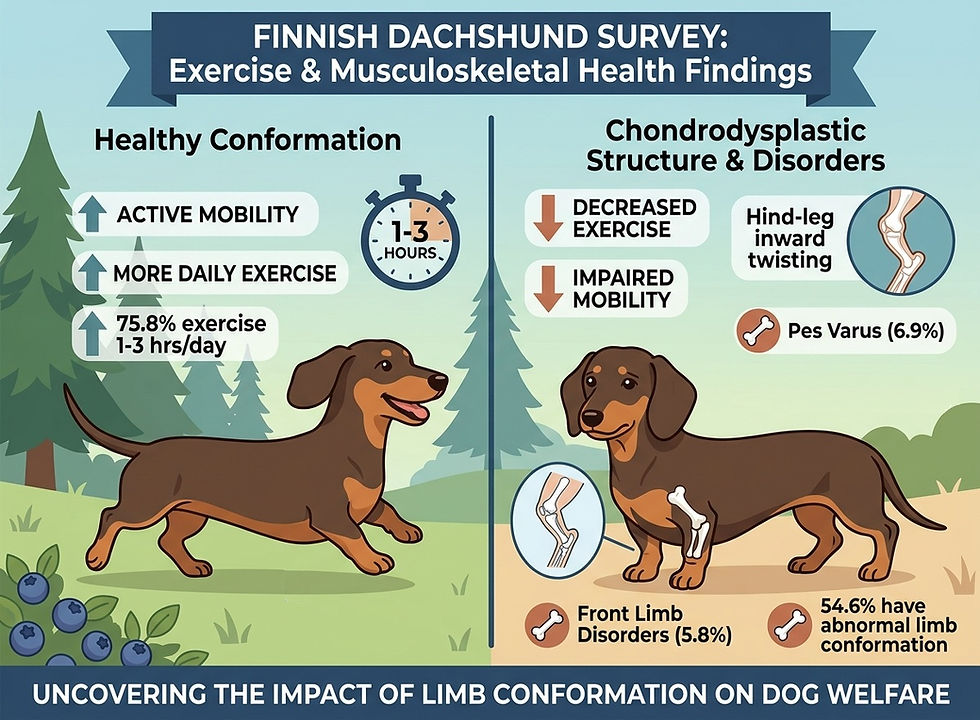
Most Dachshunds were active: 76% reportedly exercised for 1–3 hours daily, and 88% had at least an hour of activity each day.
Limb alignment concerns were common: 55% of owners reported an abnormal angle in at least one limb. Front-limb changes were reported more often than hind-limb changes.
Musculoskeletal problems were also common: 18% of dogs had at least one reported condition. The most common were pes varus (a bowed hind-limb/tibia deformity; 6.9%) and front-limb growth disorders (5.8%).
Mobility signs deserve attention: 24% of owners reported reluctance to move, 17% reluctance to jump, and 12% lameness. Dogs with a musculoskeletal disorder, limb malposition, or disc herniation were more likely to have poorer mobility.
Leg conformation was linked with activity: Dogs with valgus alignment where the lower limb/foot turns outward, especially when present on both sides, tended to exercise less and be less willing to move.
Back disease remains important: 5.2% of dogs were reported to have had intervertebral disc herniation. Common signs were pain or reluctance to move; some affected dogs also had weakness, poor coordination, or paralysis.
Age matters: Older dogs generally had less exercise and lower mobility, so gradual changes should not automatically be dismissed as “just ageing.”
Practical action points
Make mobility checks part of normal care. Watch your dog walking and standing from the front and behind. Note persistent outward- or inward-turning feet, bowed limbs, uneven weight-bearing, or changes over time.
Take subtle behaviour changes seriously. Reduced enthusiasm for walks, avoiding jumps, limping, slowing down, stiffness, or difficulty rising can be signs of discomfort, not simply stubbornness, bad weather, or getting older.
Arrange a veterinary assessment for persistent or recurring signs. Ask your vet about limb alignment, joints, pain, and, where relevant, neurological or back concerns. Seek urgent veterinary advice for sudden back pain, weakness, wobbliness, or loss of leg function.
Keep exercise regular and appropriate to the individual dog. The study supports the idea that Dachshunds can be active. Choose enjoyable, controlled activity such as walks, sniffing, play, and suitable hobbies, while adjusting duration and intensity if your dog shows discomfort or fatigue.
Plan for weather. Cold, wet, and hot conditions were commonly reported reasons for reluctance to move. Shorter, more frequent outings and sensible protection from harsh conditions may help some dogs stay comfortable.
If buying or breeding, put health before an exaggerated outline. The authors argue for straighter, healthier limb conformation and breeding decisions that prioritise mobility and welfare. Discuss documented health screening and family history with responsible breeders.
Keep the findings in perspective
This was an owner-reported online survey, not a veterinary examination of every dog. It shows associations rather than proving that a particular limb shape causes a particular outcome. The sample may also have included more owners already interested in health and pes varus than the wider Dachshund population. Still, the overall message is clear: Dachshunds are often keen, capable dogs, but their characteristic short-limbed structure can carry meaningful mobility risks that owners should identify early and discuss with a vet.
Kami Turunen, Anu Katriina Lappalainen, Jouni Juho Tapio Junnila, Heli Katariina Hyytiäinen & Liisa Iiris Onerva Lilja-Maula
Comments